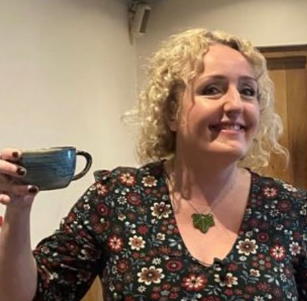
Hi, I’m Steph Hill, founder and Director of Happy Headwork and Co-Director of Happy Headwork Community CIC.
Happy Headwork is about Juicy Psychology & Sustainable Change, and what becomes possible when the two come together. A lot of thought goes into how we structure our programmes. Perhaps the simplest way to explain why we work as we do is to share the journey that brought us here, and the different strands that came together along the way.
We don’t ask people to share their trauma or personal stories in our programmes. In fact, we actively ask everyone not to, as part of keeping the space trauma-informed. So, in this section, I’m kind of breaking that rule and sharing some of mine. I’m choosing to because Happy Headwork has been shaped by both my professional and personal experience. Community members have told me that knowing this gives them encouragement and hope for what might be possible in their own lives.
I’ve given a lot of thought to this part of our site. It’s hard to write in a trauma-informed way that feels honest, without sounding cold or clinical. I hope what I’ve written helps explain our approach, and that it lands as I intend it: with courageous vulnerability, and perhaps a little hope for anyone reading who is going through a difficult time. I’ve also put the story into drop-downs, so you can choose what you’d like to read.
Before I begin, I want to say that this is no longer just my story. It is now ours. There’s the brilliant team I’m part of, the partnerships that make our work possible and stronger, and most of all the community members who show up, first for themselves and then for each other and the things we stand for together. Below is where it began and how Juicy Psychology. Sustainable Change. was born.
Read what interests you: The first drop-down mentions the tsunami, the loss of my partner and PTSD, so you can leave it closed if you prefer. The second explores how our workplace programmes started, and the third how we built Happy Headwork Community CIC.
Thank you.
Big warm & kind regards,
Steph
My personal journey
My journey with psychology began nearly 30 years ago, when I studied psychology at university. That’s where I met my partner, Chris. Afterwards, we moved to Southeast Asia and worked as English Language (ESOL) teachers.
In 2004, my mum, dad and brother came to meet us in Thailand for Christmas. We were all caught up in the Boxing Day tsunami. My family and I were very badly injured, and Chris was missing.
In the four months that followed, the search for Chris continued while we underwent multiple surgeries in hospital. Eventually, we had to return home to South Wales without knowing what had happened to him. I held on to hope throughout those months. It was a white-knuckle ride of audacious hope, but it helped me keep putting one foot in front of the other.
In April, a week before his birthday, I heard that Chris had been found and that he had lost his life. I was 26. I felt as though the whole world had been pulled out from underneath me. He was my best friend, and I was grieving him and the future we had planned together. Alongside that grief, I was experiencing post-traumatic stress, severe anxiety, panic attacks and a bunch of other horrid symptoms.
My GP referred me to a psychiatrist. After an hour opening up about what had happened, I thought this was the beginning of my support. Instead, I was told the waiting list for talk therapy was at least 18 months and offered the option of antidepressants.
I decided that medication wasn’t the choice I wanted personally, BUT sitting on a waiting list certainly wasn’t either. Patience has never been my forte!
What I remember most about that day, and what will forever motivate me to build Happy Headwork, is the feeling of powerlessness and hopelessness as I left the psychiatrist’s office. I don’t want that for anyone.
Over the following days, those feelings became frustration, even anger, and eventually a determination to find something I could do. Like I said, I had the privilege of a psychology education, and I was a teacher, which had taught me how to break down complexity to make it simpler to learn. I was going to learn.
As well as reading every relevant book I could lay my hands on, I attended training in mindfulness-based approaches, CBT, neuro-linguistic programming, solution-focused approaches and hypnotherapy, taking what helped and leaving what didn’t resonate. Later, I trained as a Clinical Solution-focused Hypnotherapist myself. But it began with trying to support myself.
Alongside that learning, I had a mantra: build it and they will come. Build the life I wanted, and hopefully my emotions would catch up.
I didn’t wait to feel better before I began building my life; I worked hard to build around what I was feeling.
Six months after the tsunami, I undertook postgraduate training in teaching adults. Later came an MSc in Disaster Management & Sustainable Development, and a career working internationally in humanitarian response. All while still experiencing grief and post traumatic stress.
That journey took me on adventures living and working in Ethiopia, Kenya, the mountains of Nepal and South Korea, and eventually to four years living on a narrowboat. There were adventures, panic attacks, moments of joy and plenty of wobbles (to say the least!). Healing was not a linear journey; it rarely is.
Over time, I overcame the symptoms of PTSD and learnt to carry the grief, in a way that enabled it to change shape in me. Learning about psychology helped, but so did building a life with purpose, connecting with others and spending time in nature. Those experiences would be central to what Happy Headwork would become. But there was more…
How Happy Headwork in workplaces came about
By the time I was 36, I’d built a career as a Learning and Development specialist, working in the UK and internationally across humanitarian response, sustainable development, and health and social care.
It had become really stark to me that at that time, these incredible people working at the hard end of being human were getting little support that reflected the complexity of their roles. Much of what was available involved generic stress management courses or employee assistance programmes (EAPs are great, of course, but not for everyone).
So, I began creating psychology-based training for colleagues (with complete imposter syndrome). It was really well received, and Happy Headwork started taking shape.
In 2016, back in South Wales as a lone parent with a young baby, I established the business that became Happy Headwork, alongside my human rights-based learning consultancy, which I still run.
Here, psychology and adult learning came together with what disaster management had taught me about working with people: understanding their needs, recognising their strengths and supporting their capacity to create change. Happy Headwork was built and continues to work with organisations to make complex ideas accessible and useful across wellbeing, team dynamics, communication, conflict and leadership. All the messy, interconnected realities of being human at work.
Happy Headwork Community CIC
In 2021, after being asked several times to bring Happy Headwork into the community, I brought together like-minded professionals from psychology-based backgrounds, arts and heritage craft, nature and conservation. All of us shared the values that shape Happy Headwork. You can meet our team here.
Ultimately, we wanted to make psychology accessible to people who wanted to know more. Support that meets people where they are, works for them and helps them make the changes they want to see in their lives.
Together, we established Happy Headwork Community CIC, so we could break down barriers!
Our first programme was Heads Up!, created for people living with stress, anxiety, low mood, depression or the effects of trauma. This five-part programme brought together evidence-based psychology in a way that was accessible, practical and enjoyable to learn.
We offered empowering learning that people could use on its own or alongside other kinds of support. It gave people a chance to learn about their nervous system, explore thinking patterns and develop tools they could use in everyday life. We also aimed to help people feel more able to access other brilliant opportunities in their communities that had previously felt out of reach.
From there, our work grew.
Psychology does love a long word, and we love finding ways to make it make sense. We use interactive activities, pictures, audio, video and a safe space to practise, helping people learn in ways that work for them.
Then came more of the sustainable development thinking…
As I mentioned earlier, building a career that gives me a sense of purpose and living close to nature have been hugely important in my healing. The psychology tools have helped, but so have the way I live, what I contribute and the connections I make. As a team, we share that mindset.
My work in disaster management has also opened my eyes to the relationships between the systems in which we live. Climate change is one example. Its effects on wellbeing are deeply unequal, shaped by poverty, access to resources and how factors such as gender and disability intersect. Those connections matter when we’re thinking about meaningful support.
When we make wellbeing and personal development solely about the self, we risk overlooking both people’s circumstances and their strengths. We can leave people feeling responsible for difficulties shaped by systems beyond their control, while missing the knowledge, skills and capacity they already have to influence the world around them.
So we have developed programmes that reflect those connections: between ourselves, our homes, communities and relationships, work, volunteering, education and the natural environment. This has meant recognising intersectional needs and providing different kinds of support to make participation possible.
It has also meant creating opportunities for people to recognise their own value and capacity to contribute within those spaces. To explore what matters to them, build confidence and see that their actions can make a difference.
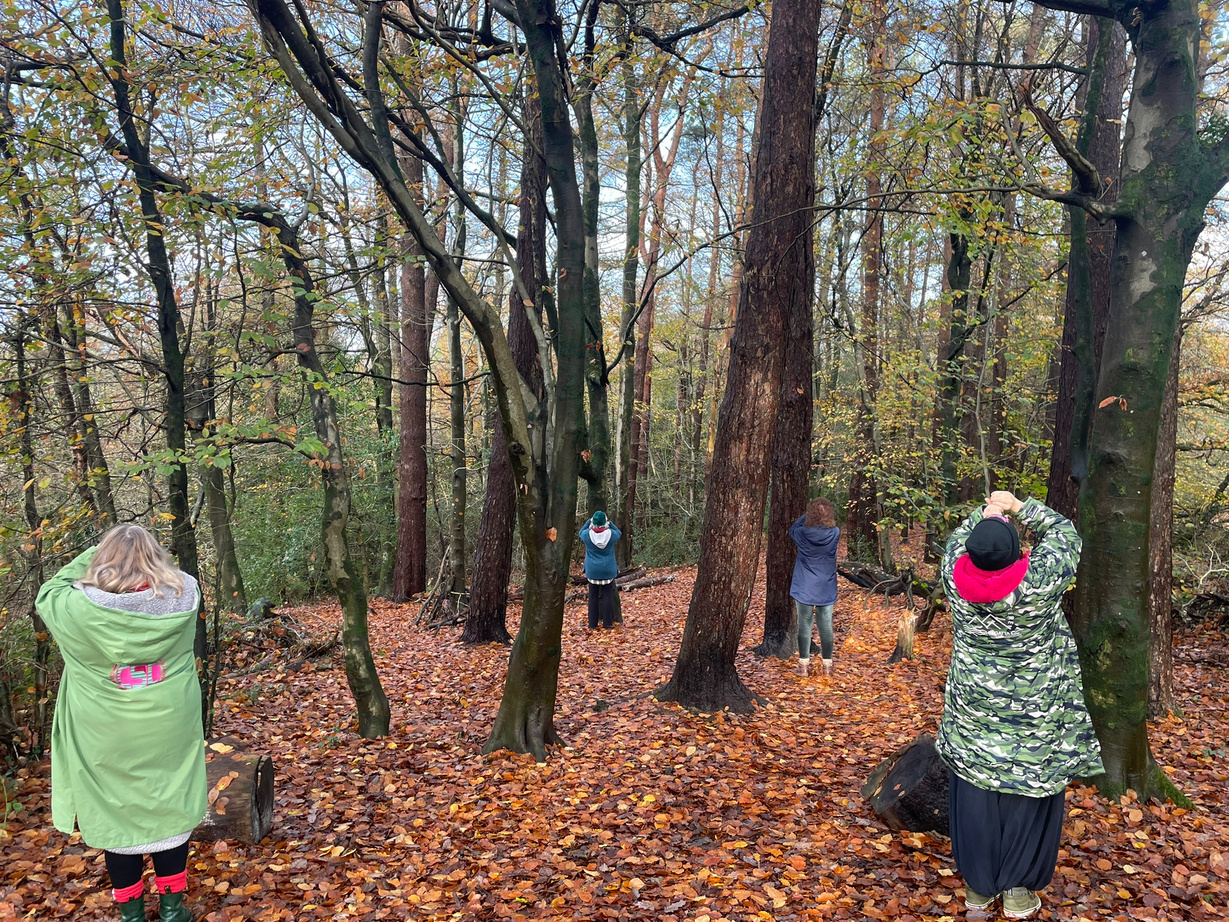
That might mean taking part in conservation, contributing to a community project or finding a way to act on climate change. Alongside the psychology we share, the experience itself can support wellbeing: connecting with others, learning skills, contributing and feeling more able to shape what happens around us.
This has led to our current approach. You can learn more on our frameworks page.
We have also built a partnership with Swansea University’s Sustainable Wellbeing Research Group to develop robust research into our programmes. Alongside helping us understand and improve our work, the partnership offers postgraduate research students opportunities to learn and grow through supporting community-led research.
So…
Today, Happy Headwork exists as two separate organisations. Happy Headwork supports staff, teams and leaders in workplaces. Happy Headwork Community CIC develops accessible programmes with communities and partners. Their needs and provision are different, but the shared ethos remains.
Viva the Juicy Psychology & Sustainable Change!
The Brave Moment podcast
For a longer conversation, join me and Kat Savage on The Brave Moment, in two parts.
Trigger warning: in-depth discussion of trauma. These conversations go into more detail about my experiences than this page. Some listeners may find them distressing. Please choose whether and when listening feels right for you, and pause or stop whenever you need to.